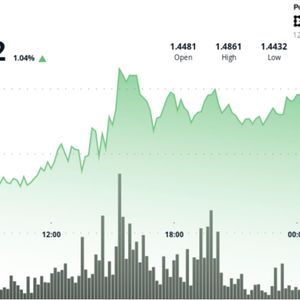
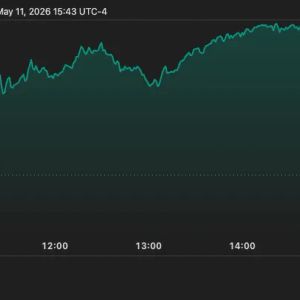
BitcoinWorld New Zealand Dollar Slides Below Mid-0.5900s as Geopolitical Tensions Fuel Risk Aversion The New Zealand Dollar (NZD) has weakened against the US Dollar (USD), slipping below the mid-0.5900s during early trading on [Current Date]. The move comes as renewed geopolitical tensions in the Middle East and ongoing uncertainty surrounding global trade policies drive investors toward safe-haven assets, weighing on risk-sensitive currencies like the Kiwi. Risk-Off Mood Dominates Forex Markets The NZD/USD pair, often a barometer for global risk appetite, has come under pressure as reports of escalating military activity in the Middle East and fresh tariff threats from major economies dampened market sentiment. The US Dollar, benefiting from its safe-haven status, has strengthened broadly, pushing the Kiwi to its lowest level in several weeks. Traders are now closely watching for any diplomatic breakthroughs or further escalation that could dictate the pair’s next move. Domestic Data and RBNZ Outlook Add to Pressure Compounding the external headwinds, softer-than-expected domestic economic data from New Zealand has also contributed to the currency’s decline. Recent figures showing a dip in business confidence and weaker retail sales have reinforced expectations that the Reserve Bank of New Zealand (RBNZ) may adopt a more accommodative monetary policy stance. Markets are currently pricing in a higher probability of an interest rate cut in the coming months, which typically weighs on a currency’s yield appeal. Technical Levels in Focus From a technical perspective, the break below the 0.5950 support level has opened the door for a potential test of the 0.5900 handle. A sustained move below this psychological level could signal further downside toward the 0.5850 region, a level last seen in mid-2023. On the upside, the 0.6000 mark now serves as immediate resistance, with a recovery above this level needed to alleviate near-term bearish pressure. What This Means for Traders and Businesses The current weakness in the NZD has direct implications for New Zealand exporters, who may benefit from a weaker currency as their goods become more competitive internationally. Conversely, importers and businesses with USD-denominated debt face higher costs. For forex traders, the pair remains highly sensitive to headline risk, and positions should be managed with caution given the fluid geopolitical landscape. Conclusion The New Zealand Dollar’s decline below the mid-0.5900s reflects a confluence of global risk aversion and domestic economic concerns. While the currency may find support from intervention rhetoric or a de-escalation in geopolitical tensions, the near-term outlook remains tilted to the downside. Market participants will continue to monitor central bank signals and geopolitical developments for directional cues. FAQs Q1: Why is the New Zealand Dollar falling? The NZD is falling primarily due to increased geopolitical tensions that have boosted demand for safe-haven assets like the US Dollar, along with weaker domestic economic data from New Zealand that has fueled expectations of RBNZ rate cuts. Q2: What is the key support level for NZD/USD? The immediate support level is at the 0.5900 psychological mark. A break below this could see the pair test the 0.5850 region, a level not seen since mid-2023. Q3: How does a weaker NZD affect the New Zealand economy? A weaker NZD benefits exporters by making their goods cheaper abroad but increases costs for importers and businesses with foreign debt. It can also contribute to higher imported inflation, which the RBNZ closely monitors. This post New Zealand Dollar Slides Below Mid-0.5900s as Geopolitical Tensions Fuel Risk Aversion first appeared on BitcoinWorld .