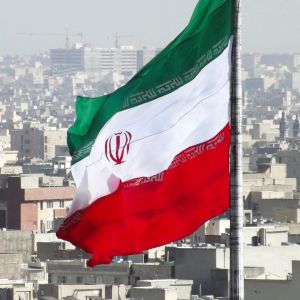
Iran has partially closed the Strait of Hormuz, and state media said the action was taken under “security precautions” while the Revolutionary Guard carried out military drills inside the waterway. The Strait sits between Oman and Iran, and it is the most critical oil route on Earth. This is the first time Iran has shut parts of the Strait of Hormuz since U.S. President Donald Trump threatened Tehran with military action in January. The waterway links crude producers in the Middle East to buyers across Asia, Europe, and the United States. In 2025, about 13 million barrels per day passed through it, which is roughly 31% of global seaborne crude flows, based on data from Kpler. Even a partial restriction of Hormuz raises risk premiums. Shipping insurance costs will surge, and global oil markets will spike too, making life hard for average people all around the world. Iran conducts drills as nuclear talks continue At the same time, the United States and Iran held talks in Geneva over Tehran’s nuclear program. Iranian Foreign Minister Abbas Araghchi spoke after the meeting. Abbas said both sides reached an understanding of the “guiding principles.” He also said progress does not mean a final agreement is close and that more work is still needed. The International Energy Agency released its monthly oil report on Monday. The agency said world oil demand will grow more slowly than expected this year. It also warned that the global market still faces a sizeable surplus despite supply outages in January. The IEA projected that global supply will exceed demand by 3.73 million barrels per day in 2026. That equals almost 4% of world demand. It is larger than other forecasts. The IEA said, “Escalating geopolitical tensions, snowstorms and extreme temperatures in North America, and Kazakh supply disruptions sparked the reversal to a bullish market.” At the same time, the agency stated that “economic uncertainties and higher oil prices” are weighing on consumption. World oil demand is now expected to rise by 850,000 barrels per day this year. That figure is 80,000 barrels per day lower than last month’s estimate. It is also below the projection from OPEC. Supply has grown faster than demand. OPEC+, which includes Russia and other allies, began increasing output in April 2025 after years of cuts. Producers such as the United States, Guyana, and Brazil also lifted production. OPEC+ paused output hikes for the first quarter of 2026. Eight members will meet on March 1 to decide whether to resume increases in April. In January, global oil supply fell by 1.2 million barrels per day to 106.6 million barrels per day due to outages in Kazakhstan and other areas. The IEA lowered its 2026 supply growth forecast to 2.4 million barrels per day from 2.5 million. OPEC+ pumped 43.3 million barrels per day in January, down 160,000 from December. That level remains well above the IEA estimate for demand for OPEC+ crude, which stands at 39.7 million barrels per day in the first quarter and 39.6 million in the second. Data published by OPEC on Wednesday showed a much smaller surplus in the second quarter and a supply deficit in 2026 overall if output stays at January levels, based on Reuters calculations. If you're reading this, you’re already ahead. Stay there with our newsletter .