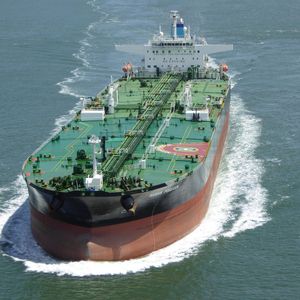
BitcoinWorld US Seizes Iranian Ship in Gulf of Oman: Critical Naval Confrontation Escalates Tensions GULF OF OMAN — April 20, 2025 — A dramatic escalation in Persian Gulf tensions unfolded today as U.S. naval forces fired upon and subsequently seized an Iranian cargo vessel, the TOUSKA, in international waters. President Donald Trump announced the military action, stating the ship attempted to breach a naval blockade. Consequently, this incident represents the most direct U.S.-Iran maritime confrontation in recent years, threatening regional stability. US Seizes Iranian Ship: A Timeline of the Gulf of Oman Incident The sequence of events began in the early hours of April 20. U.S. Navy officials detected the Iranian-flagged cargo ship TOUSKA approaching a designated maritime exclusion zone. The U.S. Fifth Fleet, operating in the region, had previously established this zone as part of a multinational security operation. Subsequently, the guided-missile destroyer USS John Paul Jones moved to intercept the vessel. According to the U.S. account, the TOUSKA ignored repeated hails and warning shots. Therefore, the destroyer fired a targeted disabling shot into the ship’s engine room. This action successfully halted the vessel. Immediately afterward, a team of U.S. Marines fast-roped from helicopters onto the TOUSKA’s deck. They secured the ship and detained its crew. Currently, U.S. forces maintain control of the vessel. Iranian Accusations and the Ceasefire Violation Claim Iran’s military response was swift and condemnatory. A spokesperson for the Hatam al-Anbia Central Command accused the United States of a flagrant violation. Specifically, they referenced an existing, albeit fragile, ceasefire agreement concerning maritime activities. The Iranian statement described the boarding operation as an act of “maritime plunder.” Furthermore, Iranian officials claimed U.S. forces used overwhelming numbers to storm the ship. They also alleged the Americans deliberately disabled the TOUSKA’s navigation systems. This action, Iran argues, transforms a naval interception into piracy. The Iranian military has issued a stern warning. They promise a decisive and imminent retaliation for what they term “armed robbery.” Historical Context of US-Iran Naval Confrontations This incident is not isolated. It fits a pattern of dangerous encounters in these strategic waters. The Strait of Hormuz, a narrow chokepoint near the Gulf of Oman, sees 20-30% of global seaborne oil traffic. Consequently, it is a perpetual flashpoint. Key historical precedents include: 1988 Operation Praying Mantis: The U.S. Navy’s largest naval battle since WWII, resulting from the mining of a U.S. warship. 2016 Incident: Iranian forces captured U.S. Navy sailors who strayed into Iranian territorial waters, releasing them after 15 hours. 2019-2021 Tanker Attacks: A series of mysterious attacks on commercial vessels, which the U.S. blamed on Iran. These events demonstrate the persistent risk of miscalculation. Each confrontation carries the potential for rapid escalation. Analyzing the Legal and Strategic Implications The legal justification for the U.S. action hinges on the concept of a naval blockade. Under international law, specifically the San Remo Manual, a blockade must be publicly declared, effective, and applied impartially to all vessels. The U.S. asserts it established such a blockade for security purposes. However, Iran and some international legal scholars may challenge its legitimacy in these specific waters. Strategically, the seizure sends a powerful message. It demonstrates U.S. willingness to enforce its directives with military force. Conversely, it provides Iran with a propaganda victory, framing itself as a victim of American aggression. The regional impact is immediate. Oil prices typically spike on such news, reflecting market fears over supply disruptions. Insurance premiums for shipping in the region will also likely increase. Expert Analysis on Regional Security Dynamics Maritime security analysts emphasize the dangerous precedent. “This moves beyond shadow warfare,” notes Dr. Elena Vance, a senior fellow at the Center for Maritime Strategy. “A direct kinetic engagement against a state-flagged vessel, followed by seizure, is a significant escalation. It crosses a threshold from deterrence posturing to active enforcement, which Iran will feel compelled to answer.” The incident also tests the cohesion of U.S. alliances in the region. Gulf Cooperation Council (GCC) states, while wary of Iran, may fear being drawn into a broader conflict. European powers, focused on preserving the JCPOA nuclear deal framework, will likely call for maximum restraint. This complex web of interests makes a unified international response difficult. The Path Forward: De-escalation or Further Conflict? The immediate concern is Iran’s promised retaliation. Options available to Tehran include asymmetric responses. These could involve harassing commercial shipping, targeting U.S. drones, or mobilizing proxy forces in Iraq or Syria. A direct military counter-strike against a U.S. naval asset is considered less likely but remains a worst-case scenario. Diplomatic channels are now critical. Back-channel communications, possibly through Swiss intermediaries or Omani officials, will likely be activated. The goal will be to establish rules of engagement to prevent a second, potentially more destructive, incident. However, with both sides publicly committed to firm positions, finding a face-saving de-escalation presents a formidable challenge. Conclusion The U.S. seizure of the Iranian TOUSKA in the Gulf of Oman marks a perilous new chapter in a long-standing adversarial relationship. This event transcends a simple naval interception; it represents a deliberate test of boundaries and political will. While the U.S. demonstrates its enforcement capability, Iran’s vow of retaliation sets the stage for further instability. The coming days will reveal whether this incident becomes a contained crisis or the catalyst for a wider regional confrontation, with profound implications for global energy security and international law. FAQs Q1: What is the TOUSKA, and what was it allegedly carrying? The TOUSKA is an Iranian-flagged general cargo ship. U.S. officials have not publicly specified its cargo, but the interception suggests it was suspected of transporting prohibited materials, possibly in violation of international sanctions or the naval blockade’s terms. Official manifests are now under review by U.S. authorities. Q2: What legal authority did the U.S. use to fire on and board the ship? The U.S. action is legally based on the declared naval blockade and the right of self-defense under the United Nations Charter. The U.S. contends the TOUSKA’s failure to heed warnings constituted a threat, justifying the disabling shot. Boarding a vessel on the high seas typically requires consent, a UN mandate, or pursuit of piracy—claims Iran disputes. Q3: How might Iran realistically retaliate? Iran’s most probable responses are asymmetric. These include increased harassment of commercial shipping by the Islamic Revolutionary Guard Corps Navy, cyberattacks on critical infrastructure, or encouraging proxy attacks on U.S. interests in the region. A direct naval battle is less likely but remains a risk. Q4: How does this affect global oil prices and shipping? Such incidents immediately create a “geopolitical risk premium” on oil prices. They also cause maritime insurers to raise war risk premiums for vessels transiting the Gulf region, increasing the cost of global trade. Prolonged tension could disrupt shipping lanes, impacting global supply chains. Q5: Have there been similar incidents recently? While harassment and close encounters are frequent, a direct firing upon and seizure of an Iranian state-flagged cargo ship by U.S. forces is a significant escalation. The last comparable state-on-state seizure in these waters was likely during the “Tanker War” of the 1980s. This post US Seizes Iranian Ship in Gulf of Oman: Critical Naval Confrontation Escalates Tensions first appeared on BitcoinWorld .