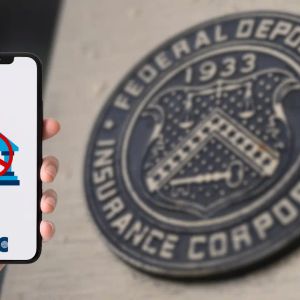
Stablecoin users in the United States may soon face a stark regulatory reality: their digital dollars will not enjoy the same federal safety net as bank deposits. The Federal Deposit Insurance Corporation (FDIC) has signaled that holders of payment stablecoins will not be eligible for federal deposit insurance, even if the assets are backed by funds held in insured banks. According to FDIC Chair Travis Hill, the agency will issue a regulation to make the rule official, as the GENIUS Act clearly bans marketing stablecoins as insured by the US government. He said that stablecoin insurance could increase risk to the FDIC’s Deposit Insurance Fund by altering how the banking system distributes deposits. Stablecoins are excluded from pass-through insurance Pass-through insurance covers any deposit made by a customer through a third-party, such as a fintech company , a broker, or a prepaid card service. However, the GENIUS Act states that the government doesn’t guarantee stablecoins because they aren’t traditional bank deposits, so the coins can’t receive any kind of protection from FDIC insurance. The FDIC said adding stablecoin could put more pressure on its deposit insurance fund and create confusion about who is really insured, since the fund only protects ordinary bank deposits. Another reason stablecoins can’t receive pass-through insurance is that it’s difficult to track the identities of their owners, especially in most systems today, making it hard for the FDIC to know who should receive coverage. If stablecoins were to receive coverage, they might look more attractive than regular bank deposits, prompting account holders to move most of their money into digital coins without much caution. If this happens, the FDIC will face sudden market changes, as stablecoin companies might hold more funds in FDIC-insured accounts. To prevent confusion, the FDIC plans to establish clear rules stating that stablecoins are not federally insured. However, tokenized deposits are eligible for FDIC insurance because the law treats them the same way as traditional bank accounts, even though insurers use new technologies to track the money. Hill holds that deposits should not lose their legal status simply because they move from traditional banking platforms to a tokenized form. As he puts it, “a deposit is a deposit.” Tokenized deposits typically function as digital tokens that represent a direct claim on funds held at a bank. This distinguishes them from stablecoins, which are usually pegged to a fiat currency but are not automatically linked to federally insured deposit accounts. Banks are changing their rules Apart from stablecoins, the FDIC and other banking regulators want to help banks manage real risks, protect customers, and support growth through reforms in supervision, capital, and liquidity. Regulators want to change how they handle bank exams, from focusing on paperwork, policies, and procedures to looking into violations of the law or malpractice by the bank. The exams will focus on actual harm to customers in consumer compliance, and regulators will target exams on products that matter most to the business rather than asking a broad list of questions. To ensure only the most serious violations count for significant enforcement, the FDIC will raise the threshold from the current $10,000 limit. Regulators also make capital reforms to encourage more lending, create fairness between large and small banks, and make the banking system safer for everyone. To do this, regulators plan to issue a new proposal to remove overly strict risk weights on mortgages and retail loans (gold-plating). Another proposal will address risk sensitivity for mortgage, consumer, and corporate lending. When calculating liquidity, regulators want to allow banks to count their ability to borrow from the Federal Reserve because the 2023 bank failures proved that the 30-day Liquidity Coverage Ratio (LCR) doesn’t consider how quickly deposits can leave a bank. FDIC also wants to better understand risks and make smarter rules in the future by studying how depositors behave during crises. The FDIC also wants to resolve failed banks in the future by lifting a 2009 policy that barred private investors from buying failed banks. Similarly, the agency plans to reduce the cost to the Deposit Insurance Fund through an emergency “shelf charter” procedure that allows non-bank investors to obtain a temporary bank charter without delay. The smartest crypto minds already read our newsletter. Want in? Join them .