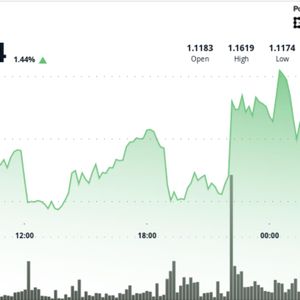
BitcoinWorld Indian Rupee Weakens as Hawkish Fed Bets and Middle East Tensions Weigh The Indian Rupee has come under renewed pressure, declining against the US Dollar as two powerful forces converge on global markets: escalating expectations of a hawkish Federal Reserve and a resurgence of conflict in the Middle East. The currency’s slide reflects a broader risk-off sentiment that is reshaping capital flows across emerging economies. What Is Driving the Rupee Lower? The primary catalyst behind the Rupee’s decline is a sharp repricing of US interest rate expectations. Recent economic data from the United States has pointed to persistent inflationary pressures, leading traders to increase bets that the Federal Reserve will maintain higher interest rates for longer than previously anticipated. This has strengthened the US Dollar index, making it more attractive for global investors to hold dollar-denominated assets. Simultaneously, the renewal of hostilities in the Middle East has injected a fresh wave of uncertainty into energy markets. India, being a major importer of crude oil, is particularly vulnerable to supply disruptions and price spikes. The prospect of higher oil import bills adds to the country’s current account deficit concerns, further pressuring the Rupee. Market Reaction and Immediate Impact The USD/INR pair has moved decisively higher, reflecting the Rupee’s depreciation. Traders report increased hedging activity as importers scramble to lock in rates, while exporters are taking advantage of the weaker Rupee to improve margins. The Reserve Bank of India (RBI) is widely expected to intervene in the forex market to curb excessive volatility, though the central bank’s ability to defend a specific level is limited if the global trend remains strong. Broader Implications for Investors and Businesses For Indian businesses, a weaker Rupee means higher costs for imported raw materials, particularly crude oil, electronics, and machinery. This could feed into domestic inflation, potentially complicating the RBI’s own monetary policy stance. For investors, the Rupee’s decline reduces the dollar-denominated returns on Indian assets, which may trigger further foreign portfolio outflows in the short term. On the positive side, export-oriented sectors such as IT services, pharmaceuticals, and textiles stand to benefit from improved competitiveness. However, the net effect on the broader economy remains negative if the depreciation is disorderly or prolonged. Conclusion The Indian Rupee’s current weakness is a textbook case of how global macroeconomic and geopolitical factors can rapidly shift currency dynamics. While the RBI has tools to smooth volatility, the fundamental drivers—hawkish Fed expectations and Middle East instability—are external and largely beyond its control. Traders and businesses should prepare for continued pressure on the Rupee until either the Fed signals a pivot or geopolitical tensions de-escalate. The coming weeks will be critical in determining whether the Rupee stabilizes or extends its losses. FAQs Q1: Why does a hawkish Federal Reserve affect the Indian Rupee? A hawkish Fed signals higher US interest rates, which attract global capital to dollar assets. This strengthens the US Dollar and puts downward pressure on emerging market currencies like the Indian Rupee. Q2: How does the Middle East conflict impact the Rupee? The Middle East is a major oil-producing region. Renewed conflict raises the risk of supply disruptions and higher crude oil prices. Since India imports most of its oil, higher prices widen the trade deficit and weaken the Rupee. Q3: Can the Reserve Bank of India stop the Rupee from falling? The RBI can intervene by selling US Dollars from its reserves to support the Rupee. However, such interventions are limited by the size of reserves and are typically used to manage volatility, not to reverse a strong global trend. This post Indian Rupee Weakens as Hawkish Fed Bets and Middle East Tensions Weigh first appeared on BitcoinWorld .