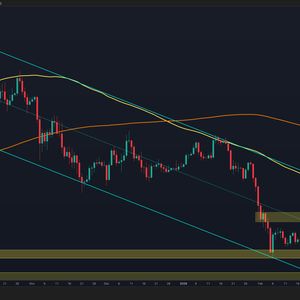
BitcoinWorld Gold Price Forecast: A Strategic Dip-Buying Outlook for 2025 – ING Analysis LONDON, March 2025 – Global financial markets continue to exhibit volatility, yet analysts at ING Bank present a compelling, data-driven case for a constructive dip-buying strategy in the gold market. Their latest technical and fundamental assessment, derived from extensive chart analysis, suggests that potential price retracements may offer strategic entry points for long-term investors seeking portfolio resilience. This outlook arrives amidst a complex macroeconomic backdrop of shifting central bank policies and persistent geopolitical tensions. Decoding the Gold Price Charts: ING’s Technical Perspective ING’s commodities strategists emphasize a chart-driven approach to understanding gold’s trajectory. Their analysis identifies several key technical levels that have historically acted as robust support and resistance. For instance, the bank’s models highlight the psychological importance of the $2,000 per ounce zone, which has transitioned from resistance to a foundational support level throughout 2024. Furthermore, moving average convergences on weekly and monthly timeframes indicate a structurally bullish long-term trend. However, the analysis also acknowledges the potential for short-term corrections, which the bank terms “constructive dips.” These are defined as pullbacks within a prevailing uptrend, often triggered by temporary dollar strength or a spike in bond yields, that do not break critical support structures. Consequently, monitoring the 100-day and 200-day moving averages provides crucial signals for timing potential entries. The Macroeconomic Canvas for Precious Metals The fundamental rationale supporting this outlook is multifaceted. Central bank demand, particularly from institutions in emerging markets, remains a powerful structural pillar. According to World Gold Council data, these banks have been consistent net buyers for over a decade, diversifying reserves away from traditional fiat currencies. Simultaneously, the global economic environment presents a mixed picture. While inflation in major economies has moderated from peaks, it remains above the 2% targets set by the Federal Reserve and European Central Bank. This scenario creates a landscape of “higher for longer” real interest rates, which typically pressures gold. However, ING analysts argue that the market has largely priced in this dynamic, and any pivot toward a more dovish monetary policy stance could act as a significant catalyst. Geopolitical instability continues to underpin safe-haven demand, providing a persistent bid for the metal during periods of uncertainty. Strategic Implementation of a Dip-Buying Approach For investors, a dip-buying strategy requires discipline and a clear framework. ING’s research suggests focusing on specific triggers rather than attempting to predict exact bottoms. Key indicators to watch include: Real Yields: A sustained decline in U.S. Treasury Inflation-Protected Securities (TIPS) yields often precedes gold strength. Dollar Index (DXY): Periods of U.S. dollar weakness typically correlate with stronger gold prices in dollar terms. ETF Flows: Reversals from outflows to inflows in major gold-backed ETFs like GLD can signal renewed institutional interest. Support Level Tests: Successful holds at major technical supports, such as the aforementioned $2,000 area, confirm market resilience. Position sizing is critical. Analysts recommend scaling into positions during a dip, allocating capital across several potential support levels rather than committing a full allocation at a single price point. This method, known as dollar-cost averaging during volatility, reduces the risk of mistiming the market and lowers the average entry cost over time. Key Gold Market Drivers & ING’s Assessment (2025 Outlook) Market Driver Current Influence ING’s Strategic View Central Bank Policy Moderately Bearish (Higher Rates) Priced In; Watch for Dovish Pivot Central Bank Demand Strongly Bullish Structural, Long-Term Support U.S. Dollar Strength Moderately Bearish Creates Dip-Buying Opportunities Geopolitical Risk Bullish (Safe-Haven) Constant Underlying Support Inflation Trends Neutral to Bullish Sticky Inflation Supports Store-of-Value Thesis Risks and Counterarguments to the Constructive Outlook A balanced analysis must consider opposing views. The primary risk to ING’s constructive dip-buying thesis is a scenario where global central banks maintain aggressively hawkish policies for longer than anticipated, pushing real yields significantly higher. This could trigger deeper and more prolonged corrections in gold. Additionally, a sharp, sustained rally in the U.S. dollar, perhaps driven by relative economic outperformance, would create persistent headwinds. Another consideration is the potential for reduced physical demand from key markets like India and China if local prices become prohibitive due to currency effects. Finally, a rapid resolution of major geopolitical conflicts could temporarily diminish the safe-haven premium embedded in the current gold price. Prudent investors, therefore, should view any dip-buying strategy as a component of a diversified portfolio rather than a concentrated bet. Historical Context and Market Psychology Examining past cycles provides valuable context. The gold market has historically experienced multi-year consolidation phases following major rallies, such as after the 2011 peak. The current period, following the 2020 surge, shares some similarities. During these phases, volatility often shakes out speculative positions, allowing stronger hands to accumulate. ING’s outlook aligns with this cycle theory, suggesting we may be in a later stage of consolidation that precedes the next leg higher. Market psychology plays a key role; widespread pessimism during a dip often marks a contrarian buying opportunity, while euphoria at new highs can signal a time for caution. Conclusion ING’s analysis presents a measured and strategic framework for navigating the gold market in 2025. Their constructive dip-buying outlook is not a call for immediate, all-in investment but a roadmap for opportunistic accumulation. By combining rigorous chart analysis with an understanding of macroeconomic drivers—from central bank demand to real interest rates—the bank identifies potential retracements as chances to build exposure to a timeless store of value. For investors, the key takeaway is preparation: defining risk tolerance, identifying key technical levels, and patiently waiting for the market to present those strategic entry points. In an uncertain financial landscape, this disciplined approach to gold offers a method to enhance portfolio diversification and long-term resilience. FAQs Q1: What does “constructive dip-buying” mean in the context of gold? A constructive dip refers to a price decline that occurs within a longer-term uptrend and does not break major support levels. Dip-buying is the strategy of purchasing an asset during these temporary pullbacks with the expectation that the primary trend will resume. Q2: What are the main fundamental factors supporting gold prices in 2025 according to ING? ING highlights sustained central bank purchasing, ongoing geopolitical tensions, and the potential for a future dovish pivot in major central bank policies as key fundamental supports for the gold market. Q3: What is the biggest risk to this positive gold outlook? The most significant risk is a scenario where global central banks maintain aggressively high interest rates for an extended period, leading to persistently high real yields, which increase the opportunity cost of holding non-yielding assets like gold. Q4: How should an investor practically implement a dip-buying strategy? Investors should identify key technical support levels in advance, use dollar-cost averaging to scale into positions during a decline, and maintain a long-term perspective, treating gold as a portfolio diversifier rather than a short-term trade. Q5: Does ING’s analysis suggest buying physical gold or financial products like ETFs? While ING’s analysis focuses on the price outlook, the dip-buying strategy can be applied to various vehicles, including physically-backed gold ETFs, gold mining stocks, or physical bullion, depending on an investor’s specific goals, access, and storage preferences. This post Gold Price Forecast: A Strategic Dip-Buying Outlook for 2025 – ING Analysis first appeared on BitcoinWorld .