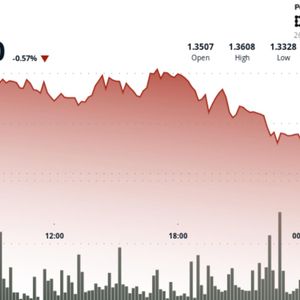
BitcoinWorld WTI crude rebounds toward $91 after US strikes in southern Iran West Texas Intermediate crude oil futures rebounded toward the $91 per barrel mark on Thursday, recovering from earlier losses after reports confirmed that U.S. forces conducted military strikes in southern Iran. The move adds a fresh layer of geopolitical risk to global oil markets already grappling with tight supply conditions. Market reaction and immediate impact WTI crude climbed approximately 1.8% in afternoon trading, reversing a slight decline from the previous session. The price surge followed unconfirmed but widely circulated reports of explosions near military installations in Iran’s southern provinces. Brent crude, the international benchmark, also rose, trading above $94 per barrel. Traders reacted swiftly, pricing in a higher probability of supply disruptions from the Strait of Hormuz, a critical chokepoint through which roughly 20% of the world’s oil passes. Any escalation involving Iran raises immediate concerns about the security of tanker traffic in the region. Context behind the strikes According to initial reports from regional news agencies and U.S. defense officials speaking on condition of anonymity, the strikes targeted facilities linked to Iran’s drone and missile programs. The operation comes amid heightened tensions following recent attacks on commercial vessels in the Red Sea and ongoing diplomatic deadlock over Iran’s nuclear program. The U.S. Department of Defense has not yet issued a formal statement confirming the full scope of the operation. However, Pentagon sources indicated the strikes were limited in scale and intended to degrade Iran’s ability to conduct further attacks against U.S. assets and allies in the region. Why this matters for oil markets The Strait of Hormuz remains the single most important oil transit route globally. Even a temporary disruption or increased insurance premiums for tankers can cause significant price volatility. Iran has previously threatened to close the strait in response to military action, though such a move remains unlikely given the risk of a broader conflict. Analysts at Goldman Sachs noted in a client briefing that the current risk premium embedded in oil prices is justified but cautioned against panic buying. “The market is pricing in a low-probability, high-impact event,” they wrote. “Unless the situation escalates into a sustained blockade, the current spike may be short-lived.” Broader market context Before the geopolitical shock, oil prices had been under pressure from demand concerns in China and the possibility of higher interest rates in the U.S. The rebound above $90 brings WTI back to levels not seen since late October 2023. The rally also lifted energy stocks, with the S&P 500 energy sector gaining 1.2% on the day. The U.S. Energy Information Administration reported a smaller-than-expected draw in crude inventories last week, which had initially capped gains. The geopolitical news, however, overshadowed the inventory data. Conclusion The U.S. military strikes in southern Iran have injected a fresh wave of uncertainty into global oil markets, pushing WTI crude back toward $91. While the immediate price reaction is significant, the sustainability of the rally depends on whether the situation de-escalates or spirals into a broader regional confrontation. Traders and policymakers alike will be watching for official statements from Washington and Tehran in the coming hours. FAQs Q1: Why did WTI crude oil prices rise after the strikes? A1: Prices rose because military strikes in Iran raise the risk of supply disruptions from the Middle East, particularly through the Strait of Hormuz, a key oil transit route. Traders price in a risk premium for potential disruptions to oil tanker traffic. Q2: How long could the price increase last? A2: The duration depends on whether the situation escalates. If the strikes remain limited and no broader conflict emerges, prices may stabilize. However, any further military action or threats to the Strait of Hormuz could sustain or increase the premium. Q3: What is the Strait of Hormuz and why is it important? A3: The Strait of Hormuz is a narrow waterway between Iran and Oman through which about 20% of the world’s oil passes. Any disruption to shipping there can cause significant global oil price volatility. This post WTI crude rebounds toward $91 after US strikes in southern Iran first appeared on BitcoinWorld .