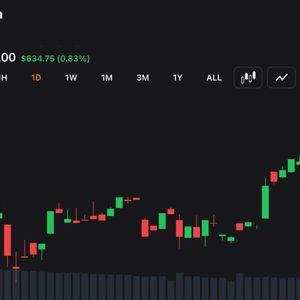
Real-world assets have become one of crypto’s most serious narratives because they connect blockchain rails with assets people already understand: Treasuries, money market funds, equities, private credit, commodities, and cash-like instruments. Instead of relying only on speculative token demand, the RWA thesis asks whether blockchain infrastructure can make traditional financial assets more accessible, programmable, transparent, and usable across digital markets. ONDO sits near the center of that conversation. Ondo Finance is associated with tokenized U.S. Treasury exposure, tokenized stocks, institutional-style infrastructure, and a growing multi-chain footprint. For many crypto readers, ONDO has become one of the simplest ways to track market interest in the RWA sector. But “becoming the face of RWA crypto” is not the same as being the safest investment, the only serious RWA project, or a guaranteed winner. The more useful question is whether Ondo has enough product traction, regulatory positioning, liquidity, and token relevance to keep representing the RWA theme as the sector matures. Key Takeaways PointDetailsONDO is one of the clearest RWA narrative tokensOndo Finance has recognizable products, visible on-chain asset value, and strong association with tokenized Treasuries and tokenized securities.Ondo is more than one productThe ecosystem includes USDY, OUSG, Ondo Global Markets, smart contracts, compliance infrastructure, and broader tokenization ambitions.Product growth does not automatically equal token upsideONDO is primarily a governance token, so investors should evaluate token utility, unlocks, valuation, and governance rights separately from Ondo Finance adoption.RWA competition is seriousAsset managers, tokenization platforms, stablecoin issuers, DeFi protocols, and oracle networks all compete for different parts of the RWA stack.Regulation is both a moat and a riskTokenized securities depend on jurisdiction, eligibility, disclosures, custody, transfer rules, and market structure. The Short Answer: ONDO Is a Strong RWA Proxy, Not the Whole Market ONDO is becoming one of the most visible crypto tickers associated with real-world assets. For many retail crypto users, it is easier to recognize ONDO than to follow every tokenized fund, broker-dealer, custodian, oracle provider, or private credit platform in the RWA ecosystem. That makes ONDO a narrative proxy: a token that traders may use to express a view on RWA growth. If tokenized Treasuries, tokenized equities, and on-chain capital markets keep gaining attention, ONDO may benefit from being one of the names most closely attached to that theme. However, the RWA market is much broader than Ondo. RWA.xyz tracks tokenized real-world asset platforms and shows that the sector includes multiple asset categories, issuers, chains, and product types rather than one single dominant project. ( RWA.xyz ) The balanced answer is this: ONDO may be becoming the retail-facing face of RWA crypto, but it is not the entire RWA sector. Its leadership depends on whether Ondo can keep converting attention into usable products, sustainable liquidity, credible compliance, and meaningful token relevance. What Ondo Finance Is Actually Building Ondo Finance is focused on bringing institutional-style financial products onchain. The important distinction is that Ondo is not simply issuing a meme-like RWA token. It is building products that connect blockchain users with yield-bearing dollar assets, tokenized securities exposure, and financial infrastructure. USDY: A Yield-Bearing Dollar Product USDY is described in Ondo’s documentation as a tokenized note that may be secured by short-term U.S. Treasuries, shares of the iShares Short Treasury Bond ETF, or bank demand deposits, depending on issuance date. The documentation also explains that USDY is available to qualifying non-U.S. individual and institutional investors and comes in accumulating and rebasing versions. ( Ondo Finance USDY documentation ) For crypto users, USDY matters because it offers a familiar RWA use case: dollar-denominated yield onchain. That does not remove risk. Users still need to understand eligibility, redemption mechanics, legal structure, smart contract exposure, liquidity, and whether the product is available in their jurisdiction. OUSG: Tokenized Short-Term U.S. Government Exposure OUSG provides tokenized exposure primarily to short-term U.S. Treasuries and government-sponsored enterprise securities. Ondo’s documentation says the portfolio is invested in funds issued by managers such as BlackRock, Franklin Templeton, WisdomTree, Fidelity, and others, with bank deposits and USDC used for liquidity purposes. ( Ondo Finance OUSG documentation ) This is important because tokenized Treasury exposure has become one of the clearest early product-market fits for RWA crypto. It is easier to understand than many experimental DeFi products: users are not betting only on a game economy or a new Layer-1 narrative, but on blockchain access to familiar cash-management instruments. Ondo Global Markets: Tokenized Stock and ETF Exposure Ondo Global Markets is designed to provide on-chain exposure to publicly traded securities for investors outside the United States. Ondo’s documentation says the platform is intended to support exposure to U.S. publicly traded securities, including stocks and ETFs, and that Ondo tokenized stocks are designed to give holders economic exposure to the underlying asset, including reinvested dividends net of withholding tax, without giving direct shareholder rights. ( Ondo Global Markets documentation ) That structure is central to the RWA debate. Tokenized stocks can make traditional market exposure more programmable and composable, but they also introduce legal, custody, transfer, pricing, tax, and market-hours complexity. This makes Ondo’s expansion ambitious, but also more complex than a simple crypto token launch. Why the RWA Narrative Keeps Attaching Itself to ONDO ONDO has become strongly linked to the RWA story because it sits at the intersection of three themes: tokenized yield, tokenized securities, and institutional-grade crypto infrastructure. First, Ondo has recognizable products. USDY and OUSG are easier to explain than many DeFi primitives because they connect to short-term U.S. Treasury or cash-management exposure. For investors trying to understand RWA crypto, that clarity matters. Second, Ondo has measurable on-chain activity. DefiLlama lists Ondo Finance across multiple chains, including Ethereum and several other networks, which helps explain why the project appears in broader DeFi and RWA market research rather than only in one ecosystem. ( DefiLlama ) Third, Ondo is trying to move beyond one asset category. Ondo Global Markets expands the discussion from tokenized Treasuries into tokenized stocks and ETFs, where the addressable market could be much larger but also more regulated and operationally demanding. Fourth, ONDO is liquid enough to be treated as a sector proxy by traders. CoinGecko lists ONDO with a large circulating market, active exchange trading, and a defined total token supply. That liquidity does not make ONDO low-risk, but it does make it easier for market participants to express a view on the RWA theme through a single token. ( CoinGecko ) The ONDO Token: Where the Bullish Case Gets Complicated The strongest mistake investors can make is assuming that Ondo Finance adoption automatically makes ONDO undervalued. Product traction and token value are related only if the token captures governance power, economic value, utility, or strategic relevance in a way the market considers meaningful. According to Ondo Foundation documentation, ONDO is the governance token for the Ondo DAO and Flux Finance. The same documentation states that the initial ONDO supply is 10 billion tokens and that there is no scheduled or planned inflation. ( Ondo Foundation token documentation ) That sounds straightforward, but governance tokens require careful analysis. A governance token can be valuable if the protocol becomes systemically important and governance has real influence. It can also underperform product growth if holders do not receive cash flows, if token utility remains limited, or if supply unlocks pressure the market. For long-term researchers, this creates a simple framework: Product question: Is Ondo growing real usage and assets? Token question: Does ONDO capture enough value from that growth? Supply question: Could future unlocks dilute existing holders? Governance question: Do tokenholders have meaningful influence? Market question: Is the current valuation already pricing in the RWA story? A strong project can still be an expensive token. A popular narrative can still correct sharply. ONDO’s RWA leadership case should therefore be evaluated through fundamentals and token structure, not only through headlines. ONDO Versus Other RWA Players ONDO’s biggest advantage is narrative clarity. It gives crypto users a simple mental shortcut: Ondo equals RWA. But RWA crypto is not one market. It includes tokenization platforms, asset managers, regulated broker-dealers, stablecoin issuers, data providers, credit marketplaces, custody firms, and oracle networks. RWA Player TypeExamplesHow They Compete With or Complement OndoTokenized Treasury and fund platformsOndo, Securitize, Franklin Templeton BenjiCompete for assets, distribution, liquidity, and institutional trust.Traditional asset managersBlackRock, Franklin Templeton, WisdomTreeBring brand trust, existing products, and regulatory experience.RWA credit protocolsCentrifuge, Maple and similar platformsFocus more on credit markets, lending, and structured yield rather than tokenized public securities.Oracle and infrastructure providersChainlink and other data layersHelp connect off-chain asset data, reserves, pricing, and compliance workflows to blockchains.Stablecoin issuersCircle, Tether and othersRepresent the largest and most widely adopted form of tokenized dollar value, though not always discussed as RWA tokens. Traditional finance participation can validate the whole sector. It can also raise the competitive bar. Ondo is not competing only with crypto-native teams. It is also competing with institutions that have deeper regulatory experience, larger distribution networks, and existing client relationships. This does not weaken Ondo’s case automatically. If anything, the entry of major institutions can help prove that tokenization is not just a temporary crypto trend. But it does mean ONDO’s “face of RWA” status will be tested by stronger and more regulated competitors over time. Risks That Could Challenge ONDO’s RWA Leadership Regulatory Limits Could Restrict Growth RWA products are not like ordinary crypto tokens. Tokenized securities, tokenized funds, and yield-bearing instruments often involve securities laws, jurisdictional restrictions, KYC, transfer controls, custody arrangements, and investor eligibility rules. Ondo Global Markets documentation states that tokenized stocks are structured as debt instruments issued by Ondo Global Markets BVI Limited and that tokenholders have economic exposure and redemption rights, but not shareholder voting rights or other shareholder rights from the issuer of the underlying securities. ( Ondo Global Markets legal and regulatory documentation ) That structure may help with compliance, but it also means users need to understand exactly what they hold. A tokenized stock is not always the same as owning the stock in a brokerage account. Custody and Counterparty Risk Remain RWA tokens depend on off-chain assets. That creates exposure to custodians, broker-dealers, fund administrators, issuers, security agents, legal documents, redemption processes, and banking partners. Even where products use safeguards such as asset backing, attestations, and independent oversight, users should not treat those controls as the same as eliminating all counterparty risk. The underlying legal and operational structure matters as much as the token contract. Interest Rates Can Change the Demand Profile Tokenized Treasury products became especially attractive during a period when short-term rates offered meaningful yield. If rates fall, the relative appeal of Treasury-backed tokens may decline, especially compared with other crypto opportunities. Lower yields would not destroy the RWA thesis, but they could change the growth rate of cash-management products. Token Unlocks Can Pressure Price Even when project adoption improves, token supply matters. If a large amount of ONDO becomes liquid over time, the market needs enough demand to absorb it. Investors should track unlock schedules, circulating supply, exchange flows, and whether unlocked tokens move to trading venues. RWA Composability Is Still Early A major promise of tokenized assets is that they can be used in DeFi: as collateral, in lending markets, in structured products, or in automated treasury management. But regulated RWAs often come with transfer restrictions and eligibility requirements. That can limit permissionless composability. A Practical Checklist Before Researching ONDO Before treating ONDO as an RWA investment thesis, research it like a protocol analyst rather than a hype-driven trader. Separate Ondo Finance from ONDO. Ondo Finance can grow as a company and product platform while the ONDO token performs differently. Look for direct links between ecosystem growth and tokenholder relevance. Track real usage, not just announcements. Follow asset value, holders, transfer volume, active addresses, supported networks, and product-level liquidity. Check tokenomics before price charts. Review circulating supply, fully diluted valuation, unlock schedules, governance allocation, and whether large holders can influence market supply. Read product restrictions. For USDY, OUSG, and Global Markets assets, check eligibility, jurisdiction, redemption terms, fees, market hours, tax treatment, and transfer rules. Compare against non-crypto competitors. Ondo does not only compete with other altcoins. It competes with asset managers, brokers, banks, custodians, and tokenization platforms. Watch liquidity quality. A token can have high trading volume and still suffer from thin order books in stressed conditions. For tokenized securities, overnight sessions and non-core hours may also have wider spreads. Avoid single-narrative concentration. RWA is promising, but no single token should be treated as the entire sector. Diversification, position sizing, and risk management matter. What Could Strengthen ONDO’s Position Next ONDO’s claim to RWA leadership would become stronger if several things happen at the same time. The first is continued asset growth across Ondo products. More asset value, more holders, and more transfer volume would show that demand is not only speculative. The second is deeper DeFi integration. If Ondo assets become widely accepted as collateral, settlement assets, treasury instruments, or portfolio building blocks across reputable protocols, the ecosystem becomes more useful. The third is clearer token value capture. Governance alone can matter, but markets often look for stronger reasons to hold a token. Any credible expansion of ONDO’s role would likely receive attention, though investors should verify details rather than assume future utility. The fourth is regulatory progress. Ondo submitted a roadmap for tokenized securities to the SEC in December 2025, arguing that tokenization policy should support direct and intermediated ownership pathways, permissioned and permissionless blockchains, transfer-agent relief, and models linked to securities held through DTC. ( SEC submission by Ondo Finance ) The fifth is execution against institutional competition. If Ondo continues to grow while traditional asset managers, stablecoin issuers, and other tokenization platforms expand, that would suggest Ondo is not merely benefiting from a temporary narrative but building durable market position. Crypto Daily and the RWA Research Mindset For Crypto Daily readers, ONDO is worth watching because it represents a serious question for the next phase of crypto adoption: can blockchain rails support real financial products at scale? The answer is still developing. Ondo has strong narrative positioning, visible product traction, and a clear connection to tokenized assets. At the same time, ONDO remains a volatile crypto asset exposed to valuation risk, regulation, liquidity shifts, token unlocks, and competition. This article is for educational purposes only and should not be treated as financial, legal, or tax advice. Anyone researching ONDO should review official documentation, market data, product terms, and personal risk tolerance before making decisions. Frequently Asked Questions Is ONDO the leading RWA crypto token? ONDO is one of the most visible RWA-related tokens, especially because Ondo Finance is closely associated with tokenized Treasuries, tokenized securities, and institutional-grade blockchain finance. However, “leading” depends on the metric: token market cap, asset value, product usage, regulatory access, liquidity, or token utility. What does Ondo Finance do? Ondo Finance builds tokenized real-world asset products and infrastructure. Its ecosystem includes USDY, OUSG, Ondo Global Markets, smart contracts, and tools designed to bring financial assets such as Treasury exposure and tokenized securities onchain. Is ONDO the same as investing in Ondo Finance? No. ONDO is a crypto token associated with Ondo DAO governance. Holding ONDO is not the same as owning equity in Ondo Finance, owning the underlying assets in Ondo products, or receiving guaranteed economic rights from Ondo’s business activity. What are the main risks of ONDO? The main risks include crypto market volatility, token unlocks, regulatory uncertainty, limited or evolving token utility, competition, liquidity risk, governance risk, and the possibility that Ondo product growth does not translate into ONDO token value. Why are RWAs important in crypto? RWAs matter because they connect blockchain infrastructure with existing financial assets such as Treasuries, stocks, funds, credit, commodities, and cash-like instruments. This could make settlement faster, improve transparency, enable programmable ownership, and create new DeFi use cases, but it also introduces legal and custody complexity. Can U.S. users access Ondo tokenized stocks? Ondo Global Markets documentation states that its tokenized stocks are generally for non-U.S. investors and are subject to jurisdictional and eligibility restrictions. U.S. persons should not assume access is available and should review the relevant product documentation and legal restrictions. Could ONDO remain the face of RWA crypto? It could, but only if Ondo keeps executing. The strongest signals would be sustained asset growth, deeper integrations, transparent backing, credible compliance, better token utility, and resilience against major competitors. Narratives can move prices in the short term, but durable leadership requires measurable adoption. Disclaimer: This article is provided for informational purposes only. It is not offered or intended to be used as legal, tax, investment, financial, or other advice.